Sunday, April 23, 2006

Sign of Jonah

The proof that Jesus gave to the unbelieving Pharisees that he was in fact the true Messiah was the "sign of the prophet Jonah. The Bible tells us clearly that Jesus our Savior, "died for our sins according to the scriptures; And that he was buried, and that he rose again the third day according to the scriptures." I Cor 15:3&4. So then the "sign " of Jonah was a forshadowing of our Lord's death burial & resurrection. In fact, the cornerstone belief of Christianity is resurrection.

38 Then certain of the scribes and of the Pharisees answered, saying,
Master, we would see a sign from thee. 39 But he answered and said unto
them, An evil and adulterous generation seeketh
after a sign; and there shall no sign be given to it, but the sign
of the prophet Jonas: 40 For as Jonas was three days and three nights in
the whale's belly; so shall the Son of man be three days and three nights in the
heart of the earth. 41 The men of Nineveh shall rise in judgment with this
generation, and shall condemn it: because they repented at the preaching of
Jonas; and, behold, a greater than Jonas is here. Matthew 12:38-41

In order for the sign of Jonah to be correct and accurate, I believe that it must also include resurrection and that there is Biblical evidence of this is in the Book of Jonah. Matthew 12 tells us that Jesus spent 3 days & nights in the heart of the earth and we also know from other Scriptures that he was physically dead. His resurrection is the victory over hell and death for all that believe. As Jonah spent the same amount of time in the belly of a great fish, I believe that he too was also resurrected.

Then Jonah prayed unto the LORD his God out of the fish's belly, 2 And
said, I cried by reason of mine affliction unto the LORD, and he heard me; out
of the belly of hell cried I, and thou heardest my voice. 3 For thou hadst
cast me into the deep, in the midst of the seas; and the floods compassed me
about: all thy billows and thy waves passed over me. 4 Then I said, I am
cast out of thy sight; yet I will look again toward thy holy temple. 5 The
waters compassed me about, even to the soul: the depth closed me round about,
the weeds were wrapped about my head. 6 I went down to the bottoms of the
mountains; the earth with her bars was about me for ever: yet hast thou brought
up my life from corruption, O LORD my God. 7 When my soul fainted within me
I remembered the LORD: and my prayer came in unto thee, into thine holy temple.
8 They that observe lying vanities forsake their own mercy. 9 But I
will sacrifice unto thee with the voice of thanksgiving; I will pay that that I
have vowed. Salvation is of the LORD. He is delivered from the fish 10 And the LORD spake unto the fish, and it vomited out Jonah upon the dry land. Jonah 2:1-10

Many unbelievers ask the question, "how could a man live for three full days submerged under water in the belly of a fish?" That is a great question! Eventhough I believe that ALL things are possible with God, I think that the Biblical answer regarding Jonah is that he didn't. When Jonah prayed in verse one, he cried out of the fish's belly. That word simply means "hollow place." In verse 2 he gives more detail and says that he cried out of the belly of hell. This is the OT word sheol equivalent to the NT hades which simply means "underworld." In verses 3&5 he speaks of being "compassed about" in the depths. Verse 6 gives the clearest evidence where he states that he "went down to the bottoms of the mountains," and that the "bars of the earth" were about him for ever. This certainly speaks of an "out of the belly experience" (please excuse the pun). He also claims that the Lord brought his life up from "corruption." I Cor 15 also uses this word to speak of physical death. I believe that the context here and that the sign Jesus gave clearly imply that Jonah had died physically and was resurrected. Chew on that for awhile, if you don't like it, you can always spit it out.

I also believe that when the apostle Paul was stoned at Lystra in 46AD, that he actually died and was brought to life again as the disciples stood round about him.

19 And there came thither certain Jews from Antioch and Iconium, who
persuaded the people, and, having stoned Paul, drew him out of the city,
supposing he had been dead. 20 Howbeit, as the disciples stood round about
him, he rose up, and came into the city: and the next day he departed with
Barnabas to Derbe. 21 And when they had preached the gospel to that city,
and had taught many, they returned again to Lystra, and to Iconium, and Antioch,
22 Confirming the souls of the disciples, and exhorting them to continue in
the faith, and that we must through much tribulation enter into the kingdom of
God. Acts 14:19-22

In 60AD, Paul humbly writes about this experience in the third person so that people wouldn't not glory in him, but in the Lord.

1 It is not expedient for me doubtless to glory. I will come to visions and
revelations of the Lord. 2 I knew a man in Christ above fourteen years ago,
(whether in the body, I cannot tell; or whether out of the body, I cannot tell:
God knoweth;) such an one caught up to the third heaven. 3 And I knew such
a man, (whether in the body, or out of the body, I cannot tell: God knoweth;)
4 How that he was caught up into paradise, and heard unspeakable words,
which it is not lawful for a man to utter. 5 Of such an one will I glory:
yet of myself I will not glory, but in mine infirmities. 6 For though I
would desire to glory, I shall not be a fool; for I will say the truth: but now
I forbear, lest any man should think of me above that which he seeth me to be,
or that he heareth of me. 7 And lest I should be exalted above measure
through the abundance of the revelations, there was given to me a thorn in the
flesh, the messenger of Satan to buffet me, lest I should be exalted above
measure. II Cor 12:1-7

In verse 2, Paul states that it was 14 years previous. If you examine the context you will discover that he was trying to deflect all attention away from him personally. If you read the previous chapter you will be amazed at what Paul suffered to serve Christ and establish the churches. I have no doubt that this "glimpse of Glory" is what motivated him and kept him going unto the very end. Paul said in Romans 8:18, "For I reckon that the sufferings of this present time are not worthy to be compared with the glory which shall be revealed in us."

The Bible does not teach "soul sleep." It clearly states that when we are "absent from the body," we are "present with the Lord." II Cor 5:8. We are created in God's image and likeness, we are tri-partate being consisting of body, soul and spirit. When we die, our soul & spirit go directly to Heaven (if we are saved) and our bodies go into the grave. I Thess 4:13-18 explains this perfectly:

But I would not have you to be ignorant, brethren, concerning them which are
asleep, that ye sorrow not, even as others which have no hope. 14 For if we
believe that Jesus died and rose again, even so them also which sleep in Jesus
will God bring with him. 15 For this we say unto you by the word of the
Lord, that we which are alive and remain unto the coming of the Lord shall not
prevent them which are asleep. 16 For the Lord himself shall descend from
heaven with a shout, with the voice of the archangel, and with the trump of God:
and the dead in Christ shall rise first: 17 Then we which are alive and
remain shall be caught up together with them in the clouds, to meet the Lord in
the air: and so shall we ever be with the Lord. 18 Wherefore comfort one
another with these words.

The Bible teaches that the bodies of the dead in Christ are in a state of "sleep" while waiting to be resurrected and glorified when united with the soul & spirit at Christ's return. Christ's resurrection makes it possible and even immutable for Christians to take part in the "sign of Jonah." The next time some zodiac loving unbeliever asks me what my sign is - I think I'll be like Jesus and just say , Jonah.

Monday, April 17, 2006

Valley News Goes to Church


Olivet Church Celebrates Rebirth
Easter Services Finally Held in New Home
By Carolyn Lorié
Valley News Staff Writer


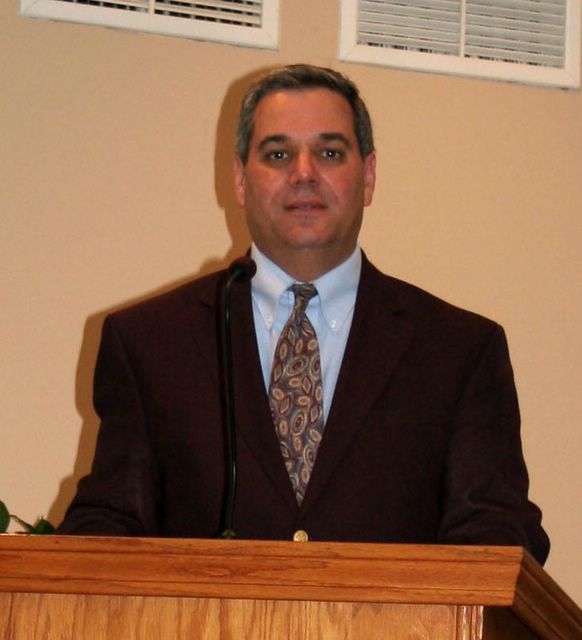
West Lebanon -- With wispy hair and a dress the color of cotton and daffodils, 18-month-old Emily Devers looks around the new church, wide-eyed and silent, as Pastor Joe Scearbo invokes the story of Jonah and the whale, the miracle of the raising of Lazarus and the Acts of the Apostles.
It is an Easter sermon about resurrection, but yesterday morning the story of the Olivet Baptist Church was one of being born again.
Started in 1993 by Scearbo, the church has grown from a handful of people gathering in the home Scearbo shares with his wife, Michele, to about 50 people showing up for sermons in a cramped space on Railroad Avenue to yesterday's inaugural service in the parish hall of the former Holy Redeemer Church on Maple Street.
“We are just so excited, because we've actually prayed about this whole property since the Catholic Church closed,” said Scearbo, minutes before his sermon.
The path to the parish hall, however, was a complicated one paved with deals between developers and a diocese, zoning board decisions and threats of lawsuits.
In 2003, Holy Redeemer Church closed because of a lack of priests, but the Catholic Diocese of Manchester held onto the property. Last year, it was in negations to sell the 3-acre lot, the church and the parish hall to Smith-Jackson, a development company based in Nashua, N.H. Part of the deal would have included ousting the Montessori School housed in the basement of the parish hall and selling that building to the Olivet Baptist Church. But Elise Thayer, head of the school, refused to leave, and threatened a lawsuit against the diocese.
In the meantime, the Lebanon Zoning Board rejected Smith-Jackson's plan to subdivide the lot, by selling the hall to Olivet, tearing down the old church and building single-family houses in its place. The deal eventually fell apart, leaving the school and the church facing an uncertain future.
Finally, Hanover developer Jolin Salazar-Kish bought the property, signed a five-year-lease with the school and rented the hall to Olivet.
“It's wonderful,” said parishoner, Lorraine Slack, of Lebanon. “We felt we needed growth and the lord led us to this space. And we feel the Holy Spirit already.”
Before starting the church, Scearbo, who is 48, was businessman living in the suburbs of Boston. He was raised a Catholic, but at 24 he said he was “called by the Lord” at which time he became a minister. Scearbo and Michele moved to Lebanon with their three children 13 years ago and put a sandwich board in their front yard inviting people to a bible-study class they held on Thursday evenings.
“We started with no one,” said Scearbo.
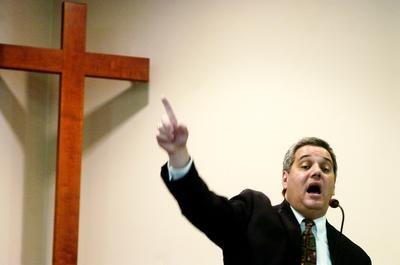
But word of the new church -- named for the mountain where Jesus was said to have spent his last hours in the garden of Gethsemane -- spread, and yesterday morning about 60 people gathered to listen to Scearbo preach. As he did so, he paced the dais, raised his arms and even jumped once to emphasize a “hallelujah.” He rarely looked at his notes and spoke in a stentorian voice that could be heard in the basement where the children had gathered for Sunday school.
Whatever twists and turns it took to get the church to Maple Street, its members, like Slack, spoke of the process in terms of faith and patience.
“It was a blessing because it showed us the power of God and the power of prayer,” said Rocky Moxley of Hartland.
Moxely said he joined the church five years ago and throughout Scearbo's preaching, he punctuated points by calling out: “Amen,” or “Yes, Lord God.”
Unlike many churches, which seem to be dominated by an aging population, Olivet has attracted a large group of young people. Among them are Michelle and Patrick Wade, who are 29 years old and 30 years old, respectively.
The couple moved to the Upper Valley from Michigan eight months ago with their two young sons and began searching for a spiritual home.
Though they have not officially joined Olivet, they said they are through looking. The Wades were one of many couples who held babies and toddlers on their laps throughout the service.
The church has about 50 core members, which Scearbo described as having a “great spirit” and being “one big happy family.” The hope, he said, is to double in number over the next five to 10 years -- but to not change in the process.
“My goal is to strive to maintain that spirit as we grow in the future,” he said.
As Scearbo closed his first sermon in the parish hall on Maple Street, a muted gray light seeped through the windows, the congregation stood for a final hymn and Emily Devers slept on her father's shoulder.
Valley News staff writer, Mark Davis, contributed to this article.
Carolyn LoriÐ can be reached at clorie@valleynews.com or (603) 727-3220.

Photo by James M. Patterson, Valley News

Monday, April 10, 2006

Easter

Now about that time Herod the king stretched forth his hands to vex certain of the church. And he killed James the brother of John with the sword. And because he saw it pleased the Jews, he proceeded further to take Peter also. (Then were the days of unleavened bread.) And when he had apprehended him, he put him in prison, and delivered him to four quaternions of soldiers to keep him; intending after Easter to bring him forth to the people. Acts 12:1-4

This is the only place in the Bible that the word Easter is found. I have been told many times by many Christians over many years that my beloved King James Bible has a mistake in this verse and the "correct" translation should be Passover. Since I believe and the Bible claims not just to be inspired but also to be preserved; and that the Word of God is inerrant and infallible, I cannot let this false charge to go unanswered. The KJV differs from all modern bible versions in that it is the only one that originates from the correct source, the Received Text or Textus Receptus. All other bibles come from or are at least influenced by the Alexandrian text which I believe to be corrupt. Although these versions differ in thousands of passages, to the best of my knowledge they all incorrectly translate the word Pascha as Passover in Acts 12:4.

Why did the KJV translators, who were noted for being consistent in translating words according to their context, use the word Easter in this passage alone and not use the word Passover as they did in every other occurrence? The answer is simple - it would just plain be incorrect!

Please note the context here. The subject is a heathen King (Herod) who is persecuting believers to please the Pharisees. The Jews honored the Passover, however the heathen celebrated Easter ( not exactly the same as our "Christian" Easter).

Secondly, I am told by Greek speaking people that they use the same word pascha when referring to orthodox Easter.

Lastly, and most importantly, Easter is the only translation of this passage that agrees with Scripture.

12 For I will pass through the land of Egypt this night, and will smite all the
firstborn in the land of Egypt, both man and beast; and against all the gods of
Egypt I will execute judgment: I am the LORD. 13 And the blood shall be to
you for a token upon the houses where ye are: and when I see the blood, I will
pass over you, and the plague shall not be upon you to destroy you, when I smite
the land of Egypt. 14 And this day shall be unto you for a memorial; and ye
shall keep it a feast to the LORD throughout your generations; ye shall keep it
a feast by an ordinance for ever. 15 Seven days shall ye eat unleavened
bread; even the first day ye shall put away leaven out of your houses: for
whosoever eateth leavened bread from the first day until the seventh day, that
soul shall be cut off from Israel. 16 And in the first day there shall be
an holy convocation, and in the seventh day there shall be an holy convocation
to you; no manner of work shall be done in them, save that which every man must
eat, that only may be done of you. 17 And ye shall observe the feast of
unleavened bread; for in this selfsame day have I brought your armies out of the
land of Egypt: therefore shall ye observe this day in your generations by an
ordinance for ever. 18 In the first month, on the fourteenth day of the
month at even, ye shall eat unleavened bread, until the one and twentieth day of
the month at even. Exodus 12:12-18

Notice the date of the Passover, it is the first month and the fourteenth day and it is followed by the Feast of Unleavened Bread.

In the fourteenth day of the first month at even is the LORD'S Passover.
And on the fifteenth day of the same month is the feast of unleavened
bread unto the LORD: seven days ye must eat unleavened bread. Lev 23:5&6

Looking back at Acts 12:3, we see that Passover had already gone by for "Then were the days of unleavened bread." Verse 4 plainly states that it was Herod's intent to bring forth Peter to trial and execution after Pascha. Since Passover was over and the feast of Unleavened Bread was already being observed (vs 3), the only correct translation is to use the word that agrees with scripture and is most likely the same context used by a heathen king. I believe that word in this lone passage to correctly be Easter.

Friday, April 07, 2006

Believers Baptism

There are a wide variety of doctrines associated with baptism and I would like to explain Baptism in the NT and comment on a couple of errant views. First, the word baptizo literally means "immersion." Sprinkling or pouring is not the same as scriptural immersion. Immersion is the only correct manner because it fulfills the picture of the gospel in Romans 6, meaning death, burial and resurrection.

Baptism's Purpose

The purpose of baptism has always been for identification. Long before John the Baptist, religious sects and secret societies required baptism as an official part of initiation or acceptance thus proclaiming ones identification as part of that group or sect. So long before Christian baptism, Satan had a counterfit baptism as explained so well by Rev. Hislop in his work called Two Babylons. Because the method was by immersion, and the purpose was for identification, this prevented what is currently practiced around the globe regarding infant baptism which is by sprinkling or pouring. This is why it is called, believers Baptism.


In those days came John the Baptist, preaching in the wilderness of Judea, And saying, Repent ye: for the kingdom of heaven is at hand. For this is he that was spoken of by the prophet Esaias, saying, The voice of
one crying in the wilderness, Prepare ye the way of the Lord, make his paths straight. And the same John had his raiment of camel's hair, and a
leathern girdle about his loins; and his meat was locusts and wild honey.
Then went out to him Jerusalem, and all Judea, and all the region round
about Jordan, And were baptized of him in Jordan, confessing their
sins. Matthew 3:1-6

John was certainly preaching the Gospel of the Kingdom when he cried for repentance and identification with the Kingdom at hand. It was John who was ordained of old to introduce the King of the Kingdom shouting, "prepare ye the way of the Lord."

Then cometh Jesus from Galilee to Jordan unto John, to be baptized of him. But John forbad him, saying, I have need to be baptized of thee, and
comest thou to me? And Jesus answering said unto him, Suffer it to be so
now: for thus it becometh us to fulfill all righteousness. Then he suffered him. And Jesus, when he was baptized, went up straightway out of the water: and, lo, the heavens were opened unto him, and he saw the Spirit of God descending like a dove, and lighting upon him: And lo a voice from
heaven, saying, This is my beloved Son, in whom I am well pleased. (vs13-17)

Some wonder why Jesus himself demanded of John to be baptized. Since John was the chosen one to herald the first advent of the Messiah, Jesus himself was immersed to identify not just with the Kingdom, but also as the King. God bearing him witness by the Holy Spirit in the form of a dove, and by the voice from heaven proclaiming Christ as well.

Paul, in Acts 19:1-6, meeting Appolos and his crew asked what baptism they had received. When they responded "the baptism of John," Paul baptized them over again in Christ. Why? So that they would correctly identify with the current message being the Gospel of Christ's death, burial and resurrection.

Although the disciple's of Appolos in Acts 19 received the Holy Spirit at that time we must remember that the book of Acts was the transitional book taking us from the Gospels (law) to the new dispensation of Grace or the Church age. According to Mark 16:19&20, The Lord gave his "stamp of approval" to the early church disciples while the churches were born and the NT nearing completion. Cf: I Cor 13:8-12.

So then after the Lord had spoken unto them, he was received up into heaven, and sat on the right hand of God. And they went forth, and preached every where, the Lord working with them, and confirming the word with signs following. Amen.

Not The Same As Spirit Baptism

Water baptism and spirit baptism are not the same. On the day of Pentecost in Acts 2, the early church disciples were baptized with the Holy Ghost the day the church was born. Then, those that gladly received the word were baptized by water upon their profession of faith in Christ, Jesus. (vs 41)

For by one Spirit are we all baptized into one body, whether we be Jews or Gentiles, whether we be bond or free; and have been all made to drink into one Spirit. I Cor 12:13

The context of this passage is obviously refering to "Spirit Baptism." The Bible clearly teaches that for NT Believers in this age, we are baptized by the Holy Ghost the moment we believe. His Spirit quickens or brings to life our dead spirit and we are Born from above according to John 3.

Not only are we baptized with the Holy Ghost the moment we repent and receive Christ; we are also sealed by His Spirit. Once the Church Age had commenced and the NT completed there was no longer any need for the "laying on of hands" in order to receive the Holy Spirit as cataloged in Acts 19:1-6 regarding those that were saved under John's ministry and message. We now are sealed from the moment we believe.

That we should be to the praise of his glory, who first trusted in Christ.
In whom ye also trusted, after that ye heard the word of truth, the
gospel of your salvation: in whom also after that ye believed, ye were sealed with that holy Spirit of promise, Which is the earnest of our
inheritance until the redemption of the purchased possession, unto the praise of his glory. Eph 1:12-14

In ancient times, declarations from the king were irrevocable when "sealed with the King's signet." Although we are able to grieve and quench the Holy Ghost within, as children of Heaven we are sealed by the Holy Ghost for all eternity Cf: II Cor 1:22 & 5:5. Ephesians 1:13 claims that being sealed by the Holy Ghost is God's earnest of our inheritance in Glory and for the redemption of the purchased possession - meaning our bodies. The word earnest means downpayment! Being sealed by God's Holy Spirit is His downpayment on those of us who were "bought with a price," even the precious blood of Christ." I Cor 6:30

Since we are sealed the moment we trust Jesus as our very own personal Savior, and because Spirit baptism and water baptism are different events, the idea of receiving a "second blessing" and loosing one's salvation do not hold up under careful examination of the Scriptures. Those that teach the second blessing believe that Spirit baptism happens post salvation and is also associated with evidence such as "speaking in tongues." I will address Eternal Security at another time.

Some also teach that water baptism is a necessary part of salvation. The first question that comes to mind is, "what about the thief on the cross?" To this they answer that Water Baptism only became essential after Christ's crucifixion. My following question is always "What about those that were saved under John the Baptist?" Christ had not yet been slain yet those disciples were instructed to be baptized! If it was not necessary, why were they compelled to do it. Of course, they have no answer. I also like to take them to I Corinthians 1;14-18.

I thank God that I baptized none of you, but Crispus and Gaius; Lest any
should say that I had baptized in mine own name. And I baptized also the household of Stephanas: besides, I know not whether I baptized any other. For Christ sent me not to baptize, but to preach the gospel: not with wisdom of words, lest the cross of Christ should be made of none effect. For the preaching of the cross is to them that perish foolishness; but unto us which are saved it is the power of God.

Paul clearly states that Christ sent him "not to baptize, but to preach the gospel." Of course, they are unable to answer this as well. We are to preach "all the Counsel" of God and "compare spiritual with spiritual" (scripture with scripture). When a doctrine is made from a single scripture or is largely confined to only one or two books of the Bible. We should immediately be suspect.

Not Required For Salvation

According to Romans 6:3-5, baptism is a picture of the gospel.

Know ye not, that so many of us as were baptized into Jesus Christ were baptized into his death? Therefore we are buried with him by baptism into death: that like as Christ was raised up from the dead by the glory of the Father, even so we also should walk in newness of life. For if we have been planted together in the likeness of his death, we shall be also in the likeness of his resurrection.

It is very clear in the NT that baptism does not save. Baptism pictures the Gospel and enables us to identify with Christ's death, burial & resurrection on the cross for our sins. Baptism is our outward & public declaration that our hope for eternity lies squarely on the sacrifice of our Savior, Jesus. We are baptized after salvation in obedience to his will and Word. Just because it is not essential for salvation does not mean that it is not important!

When the early churches were established in the Book of Acts, those that were saved were baptized shortly after their profession of faith to be obedient to Christ and to publicly declare their faith in Him.

Then they that gladly received his word were baptized: and the same day there were added unto them about three thousand souls.
the apostles work miracles And they continued steadfastly
in the apostles' doctrine and fellowship, and in breaking of bread, and in
prayers. Acts 2:41 & 42

Then Philip opened his mouth, and began at the same scripture, and preached unto him Jesus. And as they went on their way, they came unto a certain water: and the eunuch said, See, here is water; what doth hinder me to be baptized? And Philip said, If thou believest with all thine heart, thou mayest. And he answered and said, I believe that Jesus Christ is the Son of God. And he commanded the chariot to stand still: and they went down both into the water, both Philip and the eunuch; and he baptized him. Acts 8:35-38

Note: verse 37, containing the gospel ("if thou believest with all thine heart") is missing from most modern bible versions.

And brought them out, and said, Sirs, what must I do to be saved? And they said, Believe on the Lord Jesus Christ, and thou shalt be saved, and thy house. And they spake unto him the word of the Lord, and to all that were in his house. And he took them the same hour of the night, and washed their stripes; and was baptized, he and all his, straightway. And when he had brought them into his house, he set meat before them, and rejoiced, believing in God with all his house. Act 16:30-34

The question in Acts 2:37 is simply "what shall we do?" The answer in verse 38 is " repent and be baptized everyone of you in the name of Jesus Christ, for the remission of sins." The converts of the first church at Jerusalem asked a general question. I believe that Peter correctly tells them to get saved and get baptized. The Question from the Philippian jailer in Acts 16:30 is more specific, he asks "what must I do to be saved." The answer in verse 31 is simply "believe on the Lord Jesus Christ." Notice that the whole family believed the gospel and made a public declaration that same night through believers Baptism.

Commanded By Christ

Eventhough baptism does not save, the most important reason for every Born Again Believer to be immersed is because Jesus commanded it.

Then the eleven disciples went away into Galilee, into a mountain where Jesus had appointed them. And when they saw him, they worshipped him: but some doubted. And Jesus came and spake unto them, saying, All power is given unto me in heaven and in earth. Go ye therefore, and teach all nations, baptizing them in the name of the Father, and of the Son, and of the Holy Ghost: Teaching them to observe all things whatsoever I have commanded you: and, lo, I am with you alway, even unto the end of the world. Amen. Matthew 28:16-20

Jesus commanded that His disciples be baptized publicly in the name of the Father, Son & Holy Ghost. Baptism is an important step in the spiritual life of the believer to identify with the gospel and to be obedient to Christ's command. Baptism is the believers public proclamation of faith in Christ just as the Lord's Supper is a local church's public & corporate testimony of faith in Christ.

Friday, March 24, 2006

Pastor's Report 2005


This past year led our church through many ups & downs and trials and blessings. At the end of the year I can still truly say, “Praise God for His manifold Blessings.” The wedding of our daughter Elizabeth to Eric Shamansky on February 19th marked the start of 2005 with a very joyous occasion. Although I could barely walk due to a trial with tendonitis in my ankle, it was truly a blessing to officiate the ceremony of my last child to be wed. I was also honored to conduct a wedding service for Monica & Tony Kalacinsky on September 17th at Sunnymede Farm in Hartland, Vermont.

March 19th was a sad day for our church family as we said goodbye to a beloved sister in Christ. That Saturday, we packed over 90 people in our small church for the Funeral Service of our dear friend Ellen Marquay. “Mom” (as we affectionately called her) would have been very happy to know that the celebration of her entrance into Glory brought more people than ever to Olivet Baptist Church.

Hanover Terrace still remains my main focus of community outreach as I visit to encourage our senior friends in the Lord each week. Although too often friends pass on, it is always a blessing to have given them the Gospel. I would like to thank our people who minister with me at the services there. We also started a monthly service at the Westboro House in West Lebanon, NH. We thank God for this opportunity and the pleasure to see “Gram” (Beverly Potwin) each time we go.

Our annual Missions Revival was held on May 19-22. Bro Don Davis brought Arnold & Wanda Worley, Transporters for Christ, and the Mark Hill Family, missionaries to Ireland. It was a wonderful conference and both missionaries were supported by our church. Our Faith Promise Missions Giving was over $40K for the third year in a row.

The Rolands came again this November and treated us to our yearly dose of Southern Gospel Music. It is always exciting to have the Rolands sing at our church and quite uplifting.

Although the church was already too full on Sunday Mornings, the Lord brought in new people and some souls were saved at the end of the year. It is so encouraging to see God’s hand at work in our ministry.

The end of the year was also marked with the calling of Bro. Joe Poissant to the Pastorate of Green Mountain Baptist Church in Rutland, Vermont. Joe & Belinda faithfully and sacrificially served the Savior in our church and we were most delighted to see God lead them to a ministry of their own.

Our annual Christmas Gathering and Pageant was a smashing success. The children did a great job with the program as many relatives and visitors attended. The meal was fantastic as usual. We had record attendance in excess of 120 people at the Senior Center in Lebanon.

The year was most remembered by a lengthy endeavor to expand our ministry through the purchase of the Parish Center of the former Holy Redeemer Catholic Church on Maple Street. In April, we agreed to a purchase price with a development firm under contract with the Catholic Church. The developers were to subdivide the property, sell us the Parish Center and tear down the church building to construct a handful of new homes. Later in August, we began the second phase of this endeavor by requesting approval from the City of Lebanon Zoning Board. After 3 months and three times going before the board we were unable to gain approval. This nullified our contract with the developers and their contract with the church. In November, the property was purchased by a local investment firm and we began negotiating with them, leading us to our present situation. I praise God that our people did not give up faith and hope in the power of our God to provide in a miraculous way. I would like to thank all of our people for their service to Olivet Baptist Church as well as the opportunity and privilege to worship with each one of you. You make our church the special place that it is. I Corinthians 15:58.

Monday, March 20, 2006

Healthcare for Christians

With so many pastors, missionaries and church members needing affordable healthcare, here are some possible options to choose from:

Medi-Share is an affordable and biblical alternative to health insurance. It is a non-profit organization that gives Christian families the care they need without paying for the health issues related to the sins of the unsaved. Plan members must have a salvation testimony and current church membership and agree to abstain from sex outside of marriage, alcohol, tobacco and drugs. Family plans start at $232 per month for the 911 plan which carries a $911 deductible per incident and the 250 plan which is a $250 deductible per year for $374 per month. For more info check their website at www.medi-share.org.

Evangelical Benifit Trust is a full blown PPO Health Insurance plan offered to ministers and Christian workers under a group plan for each church or organization. They offer 3 levels of coverage that include a prescription drug plan. Plans and rates are tailored to fit individual needs. For example, their 90/70 plan pays 90% coverage for in program and 70% out of program with a $250 deductible. They also offer an 80/60 plan with up to a $2000 deductible. Rates are based on individuals health and the particular program and deductible chosen. They can be reached at 866.902.6227 or at www.churchplan.org.

Thursday, March 16, 2006

Olivet Baptist Church Relocating


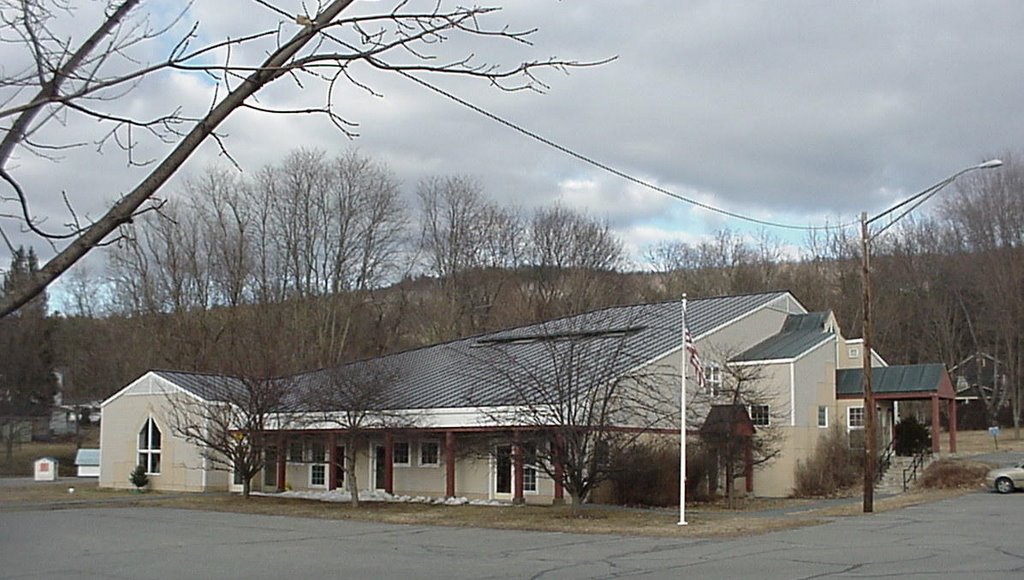
OBC will be moving just a block up the street to our new location at 44 Maple Street, West Lebanon, NH. We will be meeting in the former parish center of the Holy Redeemer Catholic Church. We have been praying about this particular property for over two years now and believe that it is God's will for us to worship there. Our plan and desire is to purchase the property at the expiration of our lease. Our immediate goal is to turn the hall into a Sanctuary so that our local church may receive more people. We hope to have our first service at our new location sometime in April. Praise God for His Faithfulness!

Tuesday, March 14, 2006

Biblical Issues

Although these issues may be controversial to some and others may not agree, I believe that there is sufficient evidence in Scripture to claim the following statements as Biblical Truth:

Racism
Mankind was made in the image of God; every person is a descendent of Adam through Noah and his sons, from whom the races came; that unkind and unjust behavior toward someone on the basis of circumstances of birth is oppressive and forbidden by the Bible; the Lord Jesus demonstrated that right behavior toward someone of another race; and the presence of racist notions among believers is especially abhorrent to God because all who are in Christ are cherished by Christ, who is no respecter of persons. Gen. 1:27; 10:1; Exodus 22:21; Malachi 2:10; James 2:9; Eph. 5:29-30; Acts 10:34-35.

Separation
All the saved should live in such a manner as not to bring reproach upon their Savior and Lord. God commands His people to separate from all religious apostasy, all worldly and sinful pleasures, practices, and associations, and to refrain from all immodest and immoderate appearances. Rom. 12:1-2; 14:13; II Cor. 6:14-7:1; II Tim. 3:1-5; I John 2:15-17;
II John 9-11; Lev. 19:28; I Cor. 6:19-20.

The Personality of Satan
Satan is an actual being, the author of sin and the cause of the Fall of Man; he is the open and declared enemy of God and man; and he shall be eternally punished in the Lake of Fire. Job 1:6-7; Isa. 14:12-17; Matt. 4:2-11; 25:41; Rev. 20:10.

Creation
God created the universe in six literal, 24-hour periods. We reject evolution, the Gap Theory, the Day-Age Theory, and Theistic Evolution as unscriptural theories of origin.
Gen. 1-2; Ex. 20:11.

Civil Government
God has ordained and created all authority consisting of three basic institutions: the home, the church and the state. Every person is subject to these authorities, but all (including the authorities themselves) are answerable to God and governed by His Word. God has given each institution specific Biblical responsibilities and balanced those responsibilities with the understanding that no institution has the right to infringe upon the other. The home, the church, and the state are equal and sovereign in their respective Biblically assigned spheres of responsibility under God. Rom. 13:1-7; Eph. 5:22-24; Heb. 13:17; I Pet. 2:13-14.

Human Sexuality

1. God has commanded that no intimate sexual activity be engaged in outside of a marriage between a man and a woman. Any form of homosexuality, lesbianism, bisexuality, bestiality, incest, fornication, adultery and pornography are sinful perversions of God’s gift of sex. God disapproves of and forbids any attempt to alter one’s gender by surgery or appearance. Gen. 2:24; Gen. 19:5, 13; Gen. 26:8-9; Lev. 18:1-30; Rom. 1: 26-29; I Cor. 5:1; 6:9; I Thess.4:1-8; Heb. 13:4.

2. The only legitimate marriage is the joining of one man and one woman. Gen. 2:24; Rom. 7:2; I Cor. 7:10; Eph. 5:22-23.

Family Relationships

1. Men and women are spiritually equal in position before God but God has ordained distinct and separate spiritual functions for men and women in the home and the church. The husband is to be the leader of the home and men are to be the leaders (pastors, elders and deacons) of the church. Accordingly, only men are eligible for ordination by the church. Gal. 3:28; Col. 3:18; I Tim. 2:8-15; 3:4-5, 12.

2. God has ordained the family as the foundational institution of human society. The husband is to love his wife as Christ loves the church. The wife is to submit herself to the Scriptural leadership of her husband as the church submits to the headship of Christ. Children are an heritage from the Lord. Parents are responsible for teaching their children spiritual and moral values and leading them, through consistent lifestyle example and appropriate discipline, including Scriptural corporal correction. Gen. 1:26-28; Ex. 20:12; Deut. 6:4-9; Ps. 127:3-5; Prov. 19:18; 22:15; 23:13-14; Mk. 10:6-12; I Cor. 7:1-16; Eph. 5:21-33; 6:1-4, Col. 3:18-21; Heb. 13:4; I Pet. 3:1-7.

Divorce and Remarriage
God disapproves of divorce and intends marriage to last until one of the spouses dies. Divorce and remarriage are permitted in the case of fornication. Although divorced and remarried persons or divorced persons may hold positions of service in the church and be greatly used of God for Christian service, they may not be considered for the offices of pastor, elder or deacon. Just as our Lord loves and forgives, we do not judge or look down upon those that have made mistakes in their lives, but try to encourage them as Christians. Mal. 2:14-17; Matt. 19:3-12; Rom. 7:1-3; I Tim. 3:2, 12; Titus 1:6.

Abortion
Human life begins at conception and that the unborn child is a living human being. Abortion constitutes the taking of unborn human life and is murder. We reject any teaching that abortions of pregnancies due to rape, incest, birth defects, gender selection, birth or population control, or the physical or mental well being of the mother are acceptable.
Job 3:16; Ps. 51:5; 139:14-16; Isa. 44:24; 49:1, 5; Jer. 1:5; 20:15-18; Luke 1:44.

Love
We should demonstrate love for others, not only toward fellow believers, but also toward both those who are not believers and those who oppose us. We are to deal with those who oppose us graciously, gently, patiently, and humbly. God forbids the stirring up of strife, the taking of revenge, or the threat or the use of violence as a means of resolving personal conflict or obtaining personal justice. Although God commands us to abhor sinful actions, we are to love and pray for any person who engages in such sinful actions. Lev. 19:18; Matt. 5:44-48; Luke 6:31; John 13:34-35; Rom. 12:9-10; 17-21; 13:8-10; Phil. 2:2-4; Col. 3:12-15; II Tim. 2:24-26; Titus 3:2; I John 3:17-18.

Missions
God has given the church a great commission to proclaim the Gospel to all nations so that there might be a great multitude from every nation, tribe, ethnic group, and language group who believe on the Lord Jesus Christ. That commission begins in our community, extends throughout our country and reaches to the ends of the earth. Matt. 28:19-20; Mark 16:15; Luke 24:46-48; John 20:21; Acts 1:8; II Cor. 5:20.

Giving
Every Christian is a steward of that portion of God’s wealth entrusted to him, is obligated to support his local church financially. God has established the tithe as a basis for giving, but every Christian should also give other offerings sacrificially and cheerfully to the support of the church, the relief of those in need, and the spread of the Gospel. A Christian relinquishes all rights to direct the use of the tithe or offering once the gift has been made. Gen. 14:20; Prov. 3:9-10; Acts 4:34-37; I Cor. 9:11-14; I Cor. 16:2; II Cor. 8:1-3, 7-15; II Cor. 9:6-7; Gal. 6:6; Eph. 4:28; I Tim. 5:17-18; I John 3:17.

Sign Gifts
The sign gifts of the Holy Spirit, such as speaking in tongues, prophesy, knowledge and gifts of healing were temporarily used by God during a transitional period of the conception and the empowering of the early church. Speaking in tongues was never the common or necessary sign of the baptism or filling of the Holy Spirit. We believe that God does miraculously heal individuals in answer to prayer, but deny special apostolic power that was given primarily to the early church disciples. I Cor. 1:22; 13:8; 14:21-22; Heb. 2:3-4.

Bible Believers

On our church sign and literature you will find that we refer to ourselves as Bible Believers. This means that we believe the Holy Scripture and endeavor to live by it. Our church verse is Philippians 1:17b, “set for the defense of the gospel.” We take the Word of God for what it plainly teaches and practice it by faith without apology. To please the Lord Jesus Christ and live for eternity is our ambition. We are for what God is for and against what God is against. Our aim is to encourage and convict so that the child of God may be fruitful in their Christian walk. We do not add or take away from the doctrines of scripture. When necessary, we warn the precious souls in our congregation against false teaching as commanded in the Bible. For those instances when the Bible is not clear we encourage our people to pray and seek God’s will and develop their own convictions as God leads. We believe this to be the true sense of Christian Liberty as taught in Romans 14. It is not our purpose to straighten every crooked stick or to force our views on anyone, only the Holy Ghost, through the Word of God and by the power of God can accomplish that task. We love and respect every truly born again child of God, eventhough we may not agree with their doctrine or practices.

We have been called legalists by more liberal Christians because we believe and obey the Bible and do not agree with their opinions. The more militant Christains have likewise labeled us as liberals. Because we do not agree with all of their convictions, we are viewed as on the fence and not taking a stand. We are neither legalists nor liberals but Bible Believers. My experience with those on the left has been that their beliefs are in some part based on what they think and how the feel and not solely based on Scripture. My experience with those on the right has been that their convictions have been placed above their beliefs and what they hold to generally comes from the views of a well known preacher and not from the Bible. As independent churches, we are to stand on the doctrines of the Bible and respect eachother’s convictions. It is human nature to gravitate towards extremes. We only become compromisers when we depart from God’s Word, either to the right or to the left. The only label that I care to pursue is that from the Lord Jesus himself, “well done thou good and faithful servant.” Amen

Booze or the Bible?

Proverbs 14:12
There is a way which seemeth right unto a man, but the end thereof are the ways of death.

Does the Bible support social drinking for believers or teach abstinence? A careful examination of Scripture along with prayerfully seeking God's will should lead us to an obvious conclusion. Let us consider the following:


I. Common Words Used For Wine

A. Old Testament

Wine, (yayin) - usually fermented or alcoholic.
Strong drink, (shekar) - prepared or distilled from grain, intoxicating.
Mixed wine, (mesek) - a mixture of wine and drugs.

When wine was used for religious purposes it was customary to mix it with water, thus diluting the alcoholic content or consume moderate amounts in between courses of prepared food.

B. New Testament

Wine, (oinos) - any extract derived from a fruit or vegetable.

This word is used generically throughout the New Testament and can represent juice or fermented wine depending on the context or circumstance.


II. Examples Of Abstinence Commanded By God

A. For Priests to be sanctified in their service for God. Drinking is deemed unholy and unclean.

Leviticus 10:9-10
Do not drink wine nor strong drink, thou, nor thy sons with thee, when ye go into the tabernacle of the congregation, lest ye die: it shall be a statute for ever throughout your generations: And that ye may put difference between holy and unholy, and between unclean and clean.


B. For Nazarites to be sanctified in their vow of fellowship with God. Abstinence is essential to walking with the Lord.

Numbers 6:2-3
Speak unto the children of Israel, and say unto them, When either man or woman shall separate themselves to vow a vow of a Nazarite, to separate themselves unto the LORD: He shall separate himself from wine and strong drink, and shall drink no vinegar of wine, or vinegar of strong drink, neither shall he drink any liquor of grapes, nor eat moist grapes, or dried.

C. For Kings to be sanctified in their rule and judgment. Drinking is for the unbelievers that perish and are appointed to destruction.

Proverbs 31:4-8
It is not for kings, O Lemuel, it is not for kings to drink wine; nor for princes strong drink: Lest they drink, and forget the law, and pervert the judgment of any of the afflicted. Give strong drink unto him that is ready to perish, and wine unto those that be of heavy hearts. Let him drink, and forget his poverty, and remember his misery no more. Open thy mouth for the dumb in the cause of all such as are appointed to destruction.

D. For Church Elders to be sanctified in their office as overseers of our souls and spiritual well-being.

1 Timothy 3:3
Not given to wine, no striker, not greedy of filthy lucre; but patient, not a brawler, not covetous.

The phrase "not given to wine (paraoinos)" literally means: not staying near wine.

E. For Deacons to be sanctified in their office as administrators of church business.

1 Timothy 3:8
Likewise must the deacons be grave, not doubletongued, not given to much wine, not greedy of filthy lucre.

The phrase "not given (prosecho) to much wine" means: do not let wine "hold the mind" or pay attention to it. The Bible does not contradict itself, in I Timothy 5:23, Paul advises Timothy to use a little wine for his infirmities or for medicinal purposes only.


III. Examples Of Compliance To God's Commanded Abstinence.

A. The family of Rechabites remained obedient.

Jeremiah 35:14
The words of Jonadab the son of Rechab, that he commanded his sons not to drink wine, are performed; for unto this day they drink none, but obey their father's commandment: notwithstanding I have spoken unto you, rising early and speaking; but ye hearkened not unto me.

B. Daniel in captivity at the king's palace would not defile himself.

Daniel 1:8
But Daniel purposed in his heart that he would not defile himself with the portion of the king's meat, nor with the wine which he drank: therefore he requested of the prince of the eunuchs that he might not defile himself.

C. John the Baptist was filled with the Holy Spirit and forbidden to drink.

Luke 1:15
For he shall be great in the sight of the Lord, and shall drink neither wine nor strong drink; and he shall be filled with the Holy Ghost, even from his mother's womb.


IV. Warnings From God

A. God says that drinking is not only unwise but leads to self deception.

Proverbs 20:1
Wine is a mocker, strong drink is raging: and whosoever is deceived thereby is not wise.

B. God says that drinking causes negative emotional and physical conditions and leads to sin. He says not to even look upon it.

Proverbs 23:29-35
Who hath woe? who hath sorrow? who hath contentions? who hath babbling? who hath wounds without cause? who hath redness of eyes? They that tarry long at the wine; they that go to seek mixed wine. Look not thou upon the wine when it is red, when it giveth his colour in the cup, when it moveth itself aright. At the last it biteth like a serpent, and stingeth like an adder. Thine eyes shall behold strange women, and thine heart shall utter perverse things. Yea, thou shalt be as he that lieth down in the midst of the sea, or as he that lieth upon the top of a mast. They have stricken me, shalt thou say, and I was not sick; they have beaten me, and I felt it not: when shall I awake? I will seek it yet again.

C. God pronounces woe upon those who seek "the party life".

Isaiah 5:11
Woe unto them that rise up early in the morning, that they may follow strong drink; that continue until night, till wine inflame them!

D. God says that drinking causes irresponsibility, selfishness, and hopes of delusion.

Isaiah 56:9-12
All ye beasts of the field, come to devour, yea, all ye beasts in the forest. His watchmen are blind: they are all ignorant, they are all dumb dogs, they cannot bark; sleeping, lying down, loving to slumber. Yea, they are greedy dogs which can never have enough, and they are shepherds that cannot understand: they all look to their own way, every one for his gain, from his quarter. Come ye, say they, I will fetch wine, and we will fill ourselves with strong drink; and to morrow shall be as this day, and much more abundant.

E. God says that drinking feeds our flesh and leads to lustfulness.

Romans 13:13-14
Let us walk honestly, as in the day; not in rioting and drunkenness, not in chambering and wantonness, not in strife and envying. But put ye on the Lord Jesus Christ, and make not provision for the flesh, to fulfill the lusts thereof.

F. God says that drinking can keep the unsaved from entering Heaven unless they repent and trust in the blood of Christ.

1 Corinthians 6:9-11
Know ye not that the unrighteous shall not inherit the kingdom of God? Be not deceived: neither fornicators, nor idolaters, nor adulterers, nor effeminate, nor abusers of themselves with mankind, Nor thieves, nor covetous, nor drunkards, nor revilers, nor extortioners, shall inherit the kingdom of God. And such were some of you: but ye are washed, but ye are sanctified, but ye are justified in the name of the Lord Jesus, and by the Spirit of our God.

G. God says that drinking leads to spiritual darkness and is unacceptable to the Lord.

Epheshians 5:8-11, 18
For ye were sometimes darkness, but now are ye light in the Lord: walk as children of light: (For the fruit of the Spirit is in all goodness and righteousness and truth;) Proving what is acceptable unto the Lord. And have no fellowship with the unfruitful works of darkness, but rather reprove them.
And be not drunk with wine, wherein is excess; but be filled with the Spirit.


V. Examples Of Believers Involved In Drunkenness.

A. Noah became drunk and indiscreet after God saved him through the flood.

Genesis 9:20-21
And Noah began to be an husbandman, and he planted a vineyard: And he drank of the wine, and was drunken; and he was uncovered within his tent.

B. David tried to deceive Uriah with drunkenness after committing adultery with his wife.
2 Samuel 11:11-13
And Uriah said unto David, The ark, and Israel, and Judah, abide in tents; and my lord Joab, and the servants of my lord, are encamped in the open fields; shall I then go into mine house, to eat and to drink, and to lie with my wife? as thou livest, and as thy soul liveth, I will not do this thing. And David said to Uriah, Tarry here to day also, and to morrow I will let thee depart. So Uriah abode in Jerusalem that day, and the morrow. And when David had called him, he did eat and drink before him; and he made him drunk: and at even he went out to lie on his bed with the servants of his lord, but went not down to his house.

Notice that Uriah, one of David's mighty men, had more sense and dedication than the king in initially refusing to drink and that David's wicked scheme failed before Almighty God.

C. In the Parable of the Faithful Steward, the Lord teaches us that we ought to be prepared for his coming again and not be found in a backsliden and sinful state.

Luke 12:41-48
Then Peter said unto him, Lord, speakest thou this parable unto us, or even to all? And the Lord said, Who then is that faithful and wise steward, whom his lord shall make ruler over his household, to give them their portion of meat in due season? Blessed is that servant, whom his lord when he cometh shall find so doing. Of a truth I say unto you, that he will make him ruler over all that he hath. But and if that servant say in his heart, My lord delayeth his coming; and shall begin to beat the menservants and maidens, and to eat and drink, and to be drunken; The lord of that servant will come in a day when he looketh not for him, and at an hour when he is not aware, and will cut him in sunder, and will appoint him his portion with the unbelievers. And that servant, which knew his lord's will, and prepared not himself, neither did according to his will, shall be beaten with many stripes. But he that knew not, and did commit things worthy of stripes, shall be beaten with few stripes. For unto whomsoever much is given, of him shall be much required: and to whom men have committed much, of him they will ask the more.


D. The believers at Corinth involved in heretical beliefs were chastised for coming to church drunk.

1 Corinthians 11:19-22
For there must be also heresies among you, that they which are approved may be made manifest among you. When ye come together therefore into one place, this is not to eat the Lord's supper. For in eating every one taketh before other his own supper: and one is hungry, and another is drunken. What? have ye not houses to eat and to drink in? or despise ye the church of God, and shame them that have not? What shall I say to you? shall I praise you in this? I praise you not.

We have all witnessed destroyed lives and families as a result of alcoholism and abuse. Drinking never strengthens or builds up, it only destroys and tears down.


VI. The Example Of Jesus

Turning water into wine at the marriage feast of Cana was the first recorded miracle of the Lord Jesus Christ. It not only gave proof of his deity (John 1:14) but led to the salvation of many disciples.

John 2:1-11
And the third day there was a marriage in Cana of Galilee; and the mother of Jesus was there: And both Jesus was called, and his disciples, to the marriage. And when they wanted wine, the mother of Jesus saith unto him, They have no wine. Jesus saith unto her, Woman, what have I to do with thee? mine hour is not yet come. His mother saith unto the servants, Whatsoever he saith unto you, do it. And there were set there six waterpots of stone, after the manner of the purifying of the Jews, containing two or three firkins apiece. Jesus saith unto them, Fill the waterpots with water. And they filled them up to the brim. And he saith unto them, Draw out now, and bear unto the governor of the feast. And they bare it. When the ruler of the feast had tasted the water that was made wine, and knew not whence it was: (but the servants which drew the water knew;) the governor of the feast called the bridegroom, And saith unto him, Every man at the beginning doth set forth good wine; and when men have well drunk, then that which is worse: but thou hast kept the good wine until now. This beginning of miracles did Jesus in Cana of Galilee, and manifested forth his glory; and his disciples believed on him.

Jesus, the Living Word of God (logos, John 1:1), could in no way act contrary to the written Word of God. The following verses will conclude that, based on this premise, what Jesus made was grape juice and not fermented or alcoholic wine:

Romans 14:21
It is good neither to eat flesh, nor to drink wine, nor any thing whereby thy brother stumbleth, or is offended, or is made weak.


Habakkuk 2:15
Woe unto him that giveth his neighbour drink, that puttest thy bottle to him, and makest him drunken also, that thou mayest look on their nakedness!

Jesus was at a formal Jewish wedding ceremony and not a party. He was there for a purpose and in the perfect will of God. He did not go there to get drunk or provide alcohol for others.


Conclusion:

1 Thessalonians 5:21-22
Prove all things; hold fast that which is good. Abstain from all appearance of evil.

In order to prove what is good and acceptable before a holy and righteous God (Romans 12:1&2), we are told to refrain ourselves from anything which is remotely considered evil or sinful.

There are many humanistic programs developed to encourage people toward abstinence. Although these may be a help, they cannot break the bonds of addiction created by this destructive agent. Drinking is a sin and not a disease. The only real cure is to repent and trust the Lord Jesus Christ as personal savior. Faith in his shed blood is the only pathway to forgiveness which provides new life in Christ (II Cor. 5:17).

John 8:36
If the Son therefore shall make you free, ye shall be free indeed.

The Levitical Offerings

THE BURNT OFFERING

This was one of the sweet savor sacrifices that pleased God and brought favor to the bearer. The five types of animals required were typical in themselves of different aspects of our Lord. The bullock speaks of Christ’s patience and endurance; the sheep of his unresisting obedience; the goat of his vicarious suffering for the sinner; and the doves of his innocency and poverty.

The offerer led his sacrificial animal to the entrance of the Tabernacle and laid his hand upon its head, fully identifying with it in compliance the substitutionary principle. He then would slay the animal. From there, the priest would sprinkle its blood on the horns of the brazen altar. The skin was kept by the priest but the animal itself was cut up and washed and laid upon the altar to be fully consumed by the fire of God. Doves were simply handed to the priest who carried out the ritual from there.

This sacrifice, a male without blemish or spot, was a foreshadowing of Christ, the lamb of God which taketh away the sin of the world. Jesus said in John 10:17 & 18, that his Father loved him because he lay down his life for the sheep in complete obedience to the Father’s will. This is fulfilled by Ephesians 5:2 where Christ has given himself for us a sacrifice of sweet savor.

The application for us would be in fully consecrating our lives to him. This is the idea in Romans 12:1, but also in Hebrews 10:8 & 9, which states that God has no pleasure in sacrifice, he only desires the true dedication of our hearts. “By a new and living way, which he hath consecrated for us.” (Heb. 10:20a). This is to be voluntary and out of love. “If we hate our lives for his sake, we shall gain life eternal.” (John 12:25)


THE MEAT OFFERING

This was really a meal offering, also of a sweet savor unto the Lord and was often given in connection with the burnt sacrifice. The ingredients are also significant in their typology. Fine flour represents Christ as the perfect man tried by suffering, oil as the outpouring of the Holy Spirit, salt as a preservative of life, and frankinscense as the aroma of dedicated service toward God. Notice that leaven, a picture of evil; and honey, a natural sweetener, were prohibited.

There were three methods of preparation for the sacrifice. It could be offered as unbaked flour, pan baked loaves or cakes, and parched or roasted ears of corn or wheat, as it was thought to be.

The offerer would bring his sacrifice to the priest who lay upon the altar a portion of flour or cakes, mingled with a portion of the oil, and all of the frankinscense, adding a touch of salt. The remainder of the flour or cakes and the oil belonged to the priests.

Christ was the perfect man, full of truth, but not naturally desirous. He was filled with the Holy Spirit and suffered greatly performing the will of his Father, whom he did well please. The typology of the ingredients point directly to Christ, and his life of service. In John 6:38 Christ said, “I came not to do mine own will, but the will of him that sent me.” This was completed at Calvary when Jesus cried, “it is finished.” (John 19:30).

Just as God desires us to consecrate our lives to him, He expects that we put our efforts toward his work in a life of service because we are “created unto good works,” (Ephesians 2:10). If our hearts are dedicated to him, then he can use us to do those great and mighty things that our labor be not in vain. Flour came from the grain that was farmed by men as a fruit of their labor, so should we labor for our God.


THE PEACE OFFERING

This sacrifice is the last of the sweet savor offerings and was similar in manner to the burnt offering. The animal prescribed could be a bullock, sheep, or goat; doves were not allowed. The animal was to be without blemish, but could be a female in this case.

The sacrifice was to be brought to the tabernacle and slain, the offerer identifying with it by laying his hand upon its head. The priest would then sprinkle its blood upon the consuming altar. The fat, kidneys, and rump were offered to God. The right shoulder was heaved up and down and the breast was waved before the Lord. This portion was presented to God but consumed by the priest. The remainder of the animal belonged to the offerer. The priest would eat his portion with his family, friends, or servants in the courtyard.

The sacrifice was made for one of three reasons, as a thank offering, a freewill offering, or a votive offering. This points to Christ the one who would reconcile us to God when we were by nature his enemies. “Therefore, being justified by faith, we have peace with God through our Lord Jesus Christ.” (Romans 5:1).

This offering is not just one of reconciliation and peace but also one of thanksgiving and emphasizes our fellowship with God. We should always be thankful and full of praise, seeking his presence. We should desire that nearness to the one who has made peace with us because of his love. The table is a picture of fellowship and is portrayed by the priest dining with his loved ones. This is exactly what we do at the Lord’s table when the entire congregation gathers in fellowship to remember their great peacemaker in corporate testimony.


THE SIN OFFERING

This sacrifice was mandatory and therefore was not of a sweet savor unto the Lord. Bullocks, goats, lambs, and doves could be offered (either male or female). The sin offering was distinguished by four types of offerers, a priest, a congregation, a ruler, and an individual. The animal used would depend upon the position of the offerer. Two methods were used for performing the ritual, one for the priest and the congregation, and a slightly different method was used for a ruler and an individual.

As in previous sacrifices the animal was always put forth as a substitute for the offerer by the laying on of hands followed by the slaying of the victim. An offering for the priest and the congregation was carried out in the following manner: The blood of the sacrifice was taken by the priest and sprinkled before the inner veil seven times and upon the horns of the altar of incense, the rest being poured out at the base of the brazen altar. The fat of the animal was cut out and offered to God on this altar. The remaining parts were taken and disposed of without the camp.

For rulers and individuals the blood was only put on the horns of the brazen altar and the rest was poured out at the base. The fat was also burned on the brazen altar but the remainder was the priest’s portion. On the Day of Atonement, blood was actually taken into the Holy of Holies and sprinkled upon the mercy seat of the ark.

This sacrifice was for those who sinned in ignorance and weakness, in error and not defiently; because of carelessness or expedience, not intentionally. This substitutionary sacrifice removed the guilt of sin against the holy God as perceived by the first four commandments. It was an atoning sacrifice and covered the sins of the offeror until Christ would come and taken them away. This foreshadowing is brought to light in II Corinthians 5:21 where “Christ became sin for us who knew no sin, that we might be made the righteousness of God in him.”


THE TRESPASS OFERING

This sacrifice is the second of the non-sweet savor offerings and closely associated with the sin offering as it was offered in similar manner. There were three types of sacrifices accepted, a female lamb or kid, two doves, or an tenth ephah of fine flour.

Similarly, the sacrifice was made as the sin offering for the common people It was brought, identified, and slain. The priest sprinkled blood on the horns of the brazen altar and offered the fat upon it. The rest of the meat and the skin was the priestly portion.

The sin offering was for our atonement, but this sacrifice was more specific in nature. It dealt with the injury or damage caused by sin, and likewise is linked to the last six commandments, which are manward and deal with our responsibilities. If a man would swear, or witness a swear; or would touch an unclean thing, or lie, commit fraud, or steal or withhold from his neighbor, he was to bring an offering.

Christ is our trespass offering, “to wit, that god was in Christ reconciling the world to himself, not imputing their trespasses unto them.” (II Cor. 5:19a). When we received Christ as Savior, he became our sin offering. After we were saved, we still sinned, so Christ was also our trespass offering to keep us in unbroken fellowship with our God. In john 13:10a Christ said, “He that is washed needeth not save to wash his feet. As Christians, we need to be sanctified daily, walking in this sin stained world.

Burning or Burial

Isaiah 55:8-9
For my thoughts are not your thoughts, neither are your ways my ways, saith the Lord. [9] For as the heavens are higher than the earth, so are my ways higher than your ways, and my thoughts than your thoughts.


Does the Bible support cremation for the believer or teach burial? A careful examination of Scriptural evidence along with earnest prayer should lead us to an understanding of God’s will.

Cremation has been practiced for thousands of years and was a method that was used by the Greeks and other ancient empires. When the Romans eventually adopted Christianity as their state religion, cremation was replaced by Christian burial. Early church saints did not practice cremation because of its pagan influence. Cremation was even prohibited by the Catholic Church in the late nineteenth century. Some other ancient cultures such as the Egyptians carefully embalmed their precious dead in preparation for an afterlife. During the new millennium however, cremation has become more popular here in America. Cremation seems to be a sensible answer to the limited number of available gravesites and the rising cost of burial. Before we draw a conclusion on this important subject, let us consider what the Bible has to say.


I. The Patriarchs of the Bible were “careful.”

Genesis 3:19
In the sweat of thy face shalt thou eat bread, till thou return unto the ground; for out of it wast thou taken: for dust thou art, and unto dust shalt thou return.

A. Dust to dust, not dust to ashes.
The Lord God formed man out of the dust of the ground and breathed life into him. We are to return unto dust or to the dust. I believe this to mean that we are to be buried in the dust or dirt and not necessarily turned into dust.


Genesis 47:28-31
And Jacob lived in the land of Egypt seventeen years: so the whole age of Jacob was an hundred forty and seven years. [29] And the time drew nigh that Israel must die: and he called his son Joseph, and said unto him, If now I have found grace in thy sight, put, I pray thee, thy hand under my thigh, and deal kindly and truly with me; bury me not, I pray thee, in Egypt: [30] But I will lie with my fathers, and thou shalt carry me out of Egypt, and bury me in their burying place. And he said, I will do as thou hast said. [31] And he said, Swear unto me. And he sware unto him. And Israel bowed himself upon the bed's head.

B. Burial grounds and deceased bodies were sacred.
Jacob made Joseph promise that he would bury him with his ancestors eventhough the Egyptians carefully preserved the corpses of their dead.


Genesis 50:24-26
And Joseph said unto his brethren, I die: and God will surely visit you, and bring you out of this land unto the land which he sware to Abraham, to Isaac, and to Jacob. [25] And Joseph took an oath of the children of Israel, saying, God will surely visit you, and ye shall carry up my bones from hence. [26] So Joseph died, being an hundred and ten years old: and they embalmed him, and he was put in a coffin in Egypt.

Hebrews 11:22
By faith Joseph, when he died, made mention of the departing of the children of Israel; and gave commandment concerning his bones.

Exodus 13:19
And Moses took the bones of Joseph with him: for he had straitly sworn the children of Israel, saying, God will surely visit you; and ye shall carry up my bones away hence with you.

C. Family gravesites were important.
Like Jacob, Joseph was careful to leave explicit instructions to carry his embalmed body back to the land of his Fathers.


Jude 1:9
Yet Michael the archangel, when contending with the devil he disputed about the body of Moses, durst not bring against him a railing accusation, but said, The Lord rebuke thee.

D. Dead or alive, our bodies belong to the Lord.
Michael the archangel rebuked Satan in the name of the Lord over the deceased body of Moses.


II. The Cremated of the Bible were “cursed.”

Joshua 7:24-26
And Joshua, and all Israel with him, took Achan the son of Zerah, and the silver, and the garment, and the wedge of gold, and his sons, and his daughters, and his oxen, and his asses, and his sheep, and his tent, and all that he had: and they brought them unto the valley of Achor. [25] And Joshua said, Why hast thou troubled us? the Lord shall trouble thee this day. And all Israel stoned him with stones, and burned them with fire, after they had stoned them with stones. [26] And they raised over him a great heap of stones unto this day. So the Lord turned from the fierceness of his anger. Wherefore the name of that place was called, The valley of Achor, unto this day.

A. Cremation was the judgement pronounced upon the transgressor.
Achan disobeyed God and took of the accursed thing. His punishment was death by stoning. His body was then burned as an example to deter others.


1 Kings 13:1-2
And, behold, there came a man of God out of Judah by the word of the Lord unto Bethel: and Jeroboam stood by the altar to burn incense. [2] And he cried against the altar in the word of the Lord, and said, O altar, altar, thus saith the Lord; Behold, a child shall be born unto the house of David, Josiah by name; and upon thee shall he offer the priests of the high places that burn incense upon thee, and men's bones shall be burnt upon thee.

B. Burning bones was considered a desecration.
Apostate priests and men who practiced false worship at a counterfeit altar would be burned by godly King Josiah as a curse.


2 Chron. 34:3-5
For in the eighth year of his reign, while he was yet young, he began to seek after the God of David his father: and in the twelfth year he began to purge Judah and Jerusalem from the high places, and the groves, and the carved images, and the molten images. [4] And they brake down the altars of Baalim in his presence; and the images, that were on high above them, he cut down; and the groves, and the carved images, and the molten images, he brake in pieces, and made dust of them, and strowed it upon the graves of them that had sacrificed unto them. [5] And he burnt the bones of the priests upon their altars, and cleansed Judah and Jerusalem.


2 Kings 23:15-20
Moreover the altar that was at Bethel, and the high place which Jeroboam the son of Nebat, who made Israel to sin, had made, both that altar and the high place he brake down, and burned the high place, and stamped it small to powder, and burned the grove. [16] And as Josiah turned himself, he spied the sepulchres that were there in the mount, and sent, and took the bones out of the sepulchres, and burned them upon the altar, and polluted it, according to the word of the Lord which the man of God proclaimed, who proclaimed these words. [17] Then he said, What title is that that I see? And the men of the city told him, It is the sepulchre of the man of God, which came from Judah, and proclaimed these things that thou hast done against the altar of Bethel. [18] And he said, Let him alone; let no man move his bones. So they let his bones alone, with the bones of the prophet that came out of Samaria. [19] And all the houses also of the high places that were in the cities of Samaria, which the kings of Israel had made to provoke the Lord to anger, Josiah took away, and did to them according to all the acts that he had done in Bethel. [20] And he slew all the priests of the high places that were there upon the altars, and burned men's bones upon them, and returned to Jerusalem.

C. The altar itself is stamped and burned in judgement.
Before the altar is destroyed, Josiah burns the bones of the false worshippers but left the graves of the true men of God alone!


Amos 2:1
Thus saith the Lord; For three transgressions of Moab, and for four, I will not turn away the punishment thereof; because he burned the bones of the king of Edom into lime:

D. God pronounced judgement on Moab for the burning of bones.
This is probably the clearest example in Scripture. God judges the Moabites for destroying the corpse of the king of Edom. Fire had consumed his body with such intense heat that his bones turned to lime.


Amos 6:9-10
And it shall come to pass, if there remain ten men in one house, that they shall die. [10] And a man's uncle shall take him up, and he that burneth him, to bring out the bones out of the house, and shall say unto him that is by the sides of the house, Is there yet any with thee? and he shall say, No. Then shall he say, Hold thy tongue: for we may not make mention of the name of the Lord.

E. The Lord’s name is not mentioned in connection with cremation.


1 Samuel 31:8-13
And it came to pass on the morrow, when the Philistines came to strip the slain, that they found Saul and his three sons fallen in mount Gilboa. [9] And they cut off his head, and stripped off his armour, and sent into the land of the Philistines round about, to publish it in the house of their idols, and among the people. [10] And they put his armour in the house of Ashtaroth: and they fastened his body to the wall of Beth-shan.
[11] And when the inhabitants of Jabesh-gilead heard of that which the Philistines had done to Saul; [12] All the valiant men arose, and went all night, and took the body of Saul and the bodies of his sons from the wall of Beth-shan, and came to Jabesh, and burnt them there. [13] And they took their bones, and buried them under a tree at Jabesh, and fasted seven days.

1 Chron. 10:8-12
And it came to pass on the morrow, when the Philistines came to strip the slain, that they found Saul and his sons fallen in mount Gilboa. [9] And when they had stripped him, they took his head, and his armour, and sent into the land of the Philistines round about, to carry tidings unto their idols, and to the people. [10] And they put his armour in the house of their gods, and fastened his head in the temple of Dagon.
[11] And when all Jabesh-gilead heard all that the Philistines had done to Saul, [12] They arose, all the valiant men, and took away the body of Saul, and the bodies of his sons, and brought them to Jabesh, and buried their bones under the oak in Jabesh, and fasted seven days.

2 Samuel 21:12-14
And David went and took the bones of Saul and the bones of Jonathan his son from the men of Jabesh-gilead, which had stolen them from the street of Beth-shan, where the Philistines had hanged them, when the Philistines had slain Saul in Gilboa: [13] And he brought up from thence the bones of Saul and the bones of Jonathan his son; and they gathered the bones of them that were hanged. [14] And the bones of Saul and Jonathan his son buried they in the country of Benjamin in Zelah, in the sepulchre of Kish his father: and they performed all that the king commanded. And after that God was intreated for the land.

F. Desecrated bodies were partially burned and the bones buried.
The bodies of King Saul and his sons were decomposing and desecrated by the enemy. The men of Jabesh burned the flesh of Saul and his sons to cleanse them of the desecration and bacteria associated with decomposed bodies. The bones were rightfully buried. This is the only Biblical example of burning dead bodies. The bodies were not totally consumed however, and there were unusual circumstances surrounding this event.


III. The teaching and example of Christ.

Matthew 26:6-13
Now when Jesus was in Bethany, in the house of Simon the leper, [7] There came unto him a woman having an alabaster box of very precious ointment, and poured it on his head, as he sat at meat. [8] But when his disciples saw it, they had indignation, saying, To what purpose is this waste? [9] For this ointment might have been sold for much, and given to the poor. [10] When Jesus understood it, he said unto them, Why trouble ye the woman? for she hath wrought a good work upon me. [11] For ye have the poor always with you; but me ye have not always. [12] For in that she hath poured this ointment on my body, she did it for my burial. [13] Verily I say unto you, Wheresoever this gospel shall be preached in the whole world, there shall also this, that this woman hath done, be told for a memorial of her.

A. The example of Christ in burial.
Precious anointing oil was used as a foreshadowing of the burial of our Saviour.


John 11:41-44
Then they took away the stone from the place where the dead was laid. And Jesus lifted up his eyes, and said, Father, I thank thee that thou hast heard me. [42] And I knew that thou hearest me always: but because of the people which stand by I said it, that they may believe that thou hast sent me. [43] And when he thus had spoken, he cried with a loud voice, Lazarus, come forth. [44] And he that was dead came forth, bound hand and foot with graveclothes: and his face was bound about with a napkin. Jesus saith unto them, Loose him, and let him go.

B. The example of Christ’s disciples.
Lazarus, the friend of Jesus was buried. Jesus resurrected his embalmed body from the grave.


Romans 6:3-5
Know ye not, that so many of us as were baptized into Jesus Christ were baptized into his death? [4] Therefore we are buried with him by baptism into death: that like as Christ was raised up from the dead by the glory of the Father, even so we also should walk in newness of life. [5] For if we have been planted together in the likeness of his death, we shall be also in the likeness of his resurrection:

C. The example of baptism.
Baptism is a picture of the Gospel; death, burial and resurrection.


1 Cor. 15:1-6
Moreover, brethren, I declare unto you the gospel which I preached unto you, which also ye have received, and wherein ye stand; [2] By which also ye are saved, if ye keep in memory what I preached unto you, unless ye have believed in vain. [3] For I delivered unto you first of all that which I also received, how that Christ died for our sins according to the scriptures; [4] And that he was buried, and that he rose again the third day according to the scriptures: [5] And that he was seen of Cephas, then of the twelve: [6] After that, he was seen of above five hundred brethren at once; of whom the greater part remain unto this present, but some are fallen asleep.

D. The example of the Gospel.
Our Lord was buried, “according to the Scriptures.”


1 Cor. 15:20-23
But now is Christ risen from the dead, and become the firstfruits of them that slept. [21] For since by man came death, by man came also the resurrection of the dead. [22] For as in Adam all die, even so in Christ shall all be made alive. [23] But every man in his own order: Christ the firstfruits; afterward they that are Christ's at his coming.

E. The example of the resurrection.
Our bodies belong to the Lord and he has promised to raise them up at his return.


1 Cor. 15:51-55
Behold, I shew you a mystery; We shall not all sleep, but we shall all be changed, [52] In a moment, in the twinkling of an eye, at the last trump: for the trumpet shall sound, and the dead shall be raised incorruptible, and we shall be changed. [53] For this corruptible must put on incorruption, and this mortal must put on immortality. [54] So when this corruptible shall have put on incorruption, and this mortal shall have put on immortality, then shall be brought to pass the saying that is written, Death is swallowed up in victory. [55] O death, where is thy sting? O grave, where is thy victory?


1 Thes. 4:13-18
But I would not have you to be ignorant, brethren, concerning them which are asleep, that ye sorrow not, even as others which have no hope. [14] For if we believe that Jesus died and rose again, even so them also which sleep in Jesus will God bring with him. [15] For this we say unto you by the word of the Lord, that we which are alive and remain unto the coming of the Lord shall not prevent them which are asleep. [16] For the Lord himself shall descend from heaven with a shout, with the voice of the archangel, and with the trump of God: and the dead in Christ shall rise first: [17] Then we which are alive and remain shall be caught up together with them in the clouds, to meet the Lord in the air: and so shall we ever be with the Lord. [18] Wherefore comfort one another with these words.

F. The Bible clearly states that the dead bodies of the Christians are in a state of Sleep. The Bible teaches that “to be absent from the body is to be present with the Lord.” Our soul and spirit go directly to heaven when we die and our bodies are buried in the grave. They are in a state called “sleep” until the resurrection.


Conclusion:

Christians have always respected the sacred graves and graveyards of the departed dead. The current trend toward cremation is due in some measure to convenience and economics. We must remember that we cannot override Scripture with logic or sensibility. Some would argue that the body degenerates in burial as well. This is true to a much lesser degree as the purpose in burial is to preserve the body as much as possible in light of the promised redemption by Christ. The word cremation means to burn. Bodies are subjected to heat of @ 2000 degrees for hours until disintegrated. Others proclaim that God is able to raise up even those whose bodies were vaporized in a nuclear explosion. The question at hand is not whether God is able, but what is God’s will?


Philip. 3:20-21
For our conversation is in heaven; from whence also we look for the Saviour, the Lord Jesus Christ: [21] Who shall change our vile body, that it may be fashioned like unto his glorious body, according to the working whereby he is able even to subdue all things unto himself.

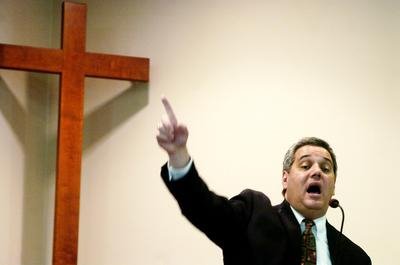
What can wash away my sins?

Jesus said, "those things which proceed out of the mouth come forth from the heart; and they defile the man...but to eat with unwashen hands defileth not a man." Mt.15:18 & 20b. It is sad to think that so many people today are careful about washing their clothes and bodies but have neglected their own sin stained hearts. A covering of religion and good works are but mere fig leaves for "all our righteousnesses are as filthy rags." Isaiah 64:6. After King David had sinned with Bathsheba, he cried unto the Lord, "wash me throughly from mine iniquity, and cleanse me from my sin...wash me, and I shall be whiter than snow." Psalm 51:2 & 7b. David was a friend of God and one of the most respected believers in history. But just like you and me, he was a sinner in need of forgiveness. He knew that he was completely unable to cleanse himself and trusted in the Lord. The bible says that Jesus "loved us, and washed us from our sins in his own blood." Rev. 1:5b. Are you preoccupied with keeping yourself clean on the outside? Only the Lord Jesus Christ can cleanse the sin in your heart. Will you ask him to be your personal savior and be forgiven right now? "For whosoever shall call upon the name of the Lord shall be saved." Romans 10:13.

Answer: Nothing but the Blood of Jesus!

Monday, March 13, 2006

My Statement of Faith

I. THE SCRIPTURES
I believe that the Holy Bible, composed of 66 books of the Old and New Testament, is the verbally inspired and infallible Word of God, the supreme and final authority in faith and life; and that God has kept His promise to preserve His word through the ages. His word for English speaking people has been preserved in the King James Version. Honest examination of manuscript evidence will conclude that all modern versions originate from a corrupt source.
II Tim. 3:16; Heb. 1:1-2; Psalm 12:6-7; Psalm 119:89; Isa. 40:8; Mat. 24:35; II Peter 1:20-21.


II. THE TRINITY
I believe in one God, eternally existing in three persons - Father, Son, and Holy Spirit.
Gen. 1:1; Duet. 6:4; Eph. 4:6; Mat. 3:16-17; Mat. 28:19; II Cor. 13:14; I Peter 1:2; I John 5:6-8.


III. THE LORD JESUS CHRIST
I believe in the deity of the Lord Jesus Christ, His virgin birth, His sinless life, His true humanity, His miracles, His vicarious and atoning death on the cross, His bodily resurrection, His ascension into heaven, His present intercession and sole mediatorship, and His personal and visible return in power and glory. John 1:1,14; Mat. 1:18-23; Col. 2:9; Luke 1:35; I John 3:5; Acts 2:22-24; Col. 1:14; Gal. 1:4; Mark 10:45;
I Cor. 15:3-5; Acts 1:9-11; Titus 2:13; I Thes. 4:13-18; I Cor. 15:51-57; Heb. 7:25; I Tim. 2:5.


IV. THE HOLY SPIRIT
I believe in the personality of the Holy Spirit, who is our comforter, and it is His ministry to reveal Christ to mankind. He also convicts of sin, regenerates, sanctifies, and empowers for service.
John 14:16-17; John 16:7-8, 13-14; John 3:3; Eph. 1:13; Eph. 5:18; Rom. 8:26-27; I Cor. 2:9-12;
Psalm 139:7-8; Gen. 1:2-3; Rom. 8:2,10-14; Acts 1:8.


V. MAN
I believe that man was created in the image of God; that he sinned and thereby incurred spiritual death; and that "all have sinned and come short of the Glory of God." Romans 3:23.
Gen. 1:26-27; Gen. 2:17; Gen. 3:6; Rom. 5:12; Eph. 2:1; Acts 16:31; Rom. 10:13.


VI. SALVATION
I believe that the Lord Jesus Christ died for our sins according to the scriptures and salvation from sin is received only by the grace of God through personal faith in Jesus Christ. All who receive Him are justified on the basis of His shed blood, born of the Spirit and thereby become children of God.
I Cor. 15:3-4; Rom. 10:17; John 1:12; John 3:4-7,16; Acts 4:12; John 14:6; Rom. 3:10-11,23-24;
Luke 13:5; Rom. 10:9-10,13; Eph. 2:8-9; Titus 3:5.


VII. ETERNAL CONSCIOUSNESS
I believe in the resurrection of the saved to everlasting conscious blessedness with Christ and in the resurrection of the lost to everlasting conscious punishment in the lake of fire.
John 5:28-29; Rev. 20:5; I Thes. 4:17; I Cor. 15:51-55; Mat. 25:41; Rev. 20:14-15; Rev. 21:8.


VIII. ETERNAL SECURITY
I believe that all true believers, having been born again into the family of God, are possessors of everlasting life and shall never perish; for they are eternally secure in the Lord Jesus Christ.
Titus 1:2; I John 2:25; John 3:16; John 5:24; John 6:37; John 10:27-31; II Tim. 1:12; Eph. 1:13-14;
Rom. 8:28-38; I Peter 1:4-5; Jude 1.


IX. THE CHURCH
I believe that the Church is the body of Christ and a spiritual organism composed of scripturally baptized, born again believers whom God has called together for worship, service, and the spread of the Gospel. The Bible teaches that the church is made up of God's "called out" people in a given locality, and not a universal or invisible institution.
Heb. 10:25; Mat. 16:18; Acts 2:47; I Cor. 1:2; Rom. 16:3-5; Gal. 1:2; Col. 1:18; Eph. 1:22-23.


X. ORDINANCES
I believe that baptism is the immersion of the believer in water, portraying death to sin and resurrection to newness of life. The Lord's Supper is a commemoration of the Lord's death until He comes.
Mat. 3:13-17; Acts 2:38; Rom. 6:4; Acts 8:36-37; Mat. 26:26-28; I Cor. 11:23-30.


XI. THE GREAT COMMISSION
I believe it is the responsibility of all believers to make known the gospel of Jesus Christ to all men. Mark 16:15; II Cor. 6:2; II Tim. 4:2; Mat. 28:19-20; Ezek. 3:17-21.


XII. THE FUTURE
I believe in the pretribulational and premillenial return of Christ for his Bride, the Church. Following this period known as the Tribulation, Christ will return with his church to set up the literal millennial kingdom.
I Thes. 5:9; Rev. 3:3,10; Rev. 4:1; Rom. 8:1; John 5:24; John 14:2-3; Acts 1:11; Phil. 3:20-21; Col. 3:1-4;
I Thes. 1:10; James 5:8; Titus 2:13; I Thes. 4:13-18; I Cor. 15:51-57; Joel 2:1-2; Mat. 24:21-22;
Luke 21:25-26; Dan. 9:24-27.

Little Jack


We had our very first grandbaby born on January 11th. Jack Leland, son of Adam and Andrea of Wilder, Vermont.
Nana is the most happy!

Don't Look Back!


Luke 9:62
And Jesus said unto him, No man, having put his hand to the plough, and looking back, is fit for the kingdom of God.

The Christians' 3 great adversaries are the World, the Flesh & the Devil. We are often tempted to return to "wallow in the mire" that our Saviour's blood delivered us from. This temptation is often difficult to resist when we are not walking with God in the power of the Holy Ghost. Why is it that the very thing we were thankful to be delivered from and forgiven for is so alluring to our "old man." Romans chapter six clearly exhorts us to "reckon ourselves dead" and Jesus our Saviour commanded us to "take up our cross" and die daily. II Corinthians 7:1 urges us to "cleanse ourselves from the filthiness of the flesh and spirit." When I look back to the way I lived my life before Jesus saved me, I become totally disgusted. Those things that I called "fun," God calls sin. We as Christians are to have the kind of testimony that affects the unsaved and sinners. When they affect us we become more tempted by the things of this world and the desires of our flesh. It is a sad reminder of our spiritual condition.

Genesis 19:26
But his wife looked back from behind him, and she became a pillar of salt.

We often resemble Lots's wife when we are taken with temptation. Notice that she did not just "look back," she "looked back from behind him." As the angels lead the family away to safety, she lagged behind her husband. Her heart and life was back in that wicked city that God would destroy. Many of the things that capture our time and attention will be destroyed as well. Sin will not be admitted in the gates of Glory! Take heed and don't look back. Instead, Look up! "For our conversation is in heaven; from whence also we look for the Saviour, the Lord Jesus Christ." (Philippians 3:20)